
Choosing the right fuel tank: Your guide for optimising onsite storage for efficiency
Depending on the industry your business operates in, the choice of fuel storage tank plays a crucial role in ensuring operational efficiency and cost-effectiveness. Selecting the appropriate tank size can contribute towards streamlining onsite storage and significant savings in both time and money in the long term. Equally important is understanding which tank best suits your business, a decision that hinges on the type of fuel currently in use. In this blog, you’ll learn more about the ideal process for choosing the right fuel tank for your business, and how Durotank can help fuel those needs.
Assessing fuel needs
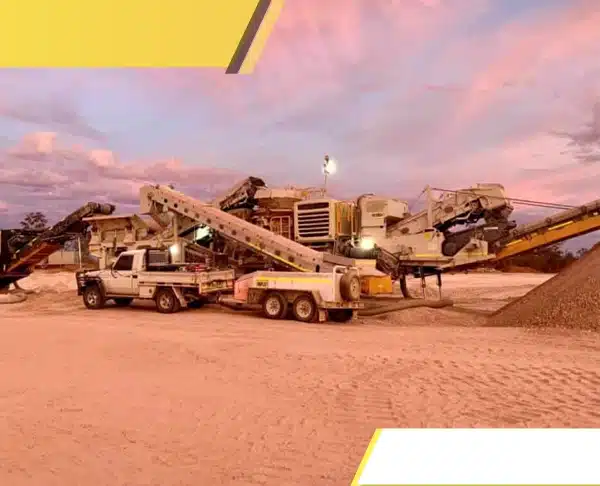
Before diving into the specifics, it’s essential to assess your company’s fuel consumption patterns. Understanding how much fuel your operations typically require between refills is important for this. Whether you’re in construction, agriculture, or transportation, the frequency and volume of fuel consumption dictate the optimal tank size. For example, construction companies often require transportable tank solutions because of the dynamic nature of their work. These tanks are typically smaller in volume. In contrast, industries like agriculture and mining often use larger, fixed tank setups to ensure continuous supply for their substantial and more permanent onsite operations.
Whether planning for short or long-term projects, it’s crucial to estimate your fuel consumption costs accurately as these costs help in budgeting for machinery operations effectively. For insights into potential cost savings, explore our Fuel Savings Calculator which will help you discover how much you could save on fuel expenses with a Durotank product.
Available tank sizes
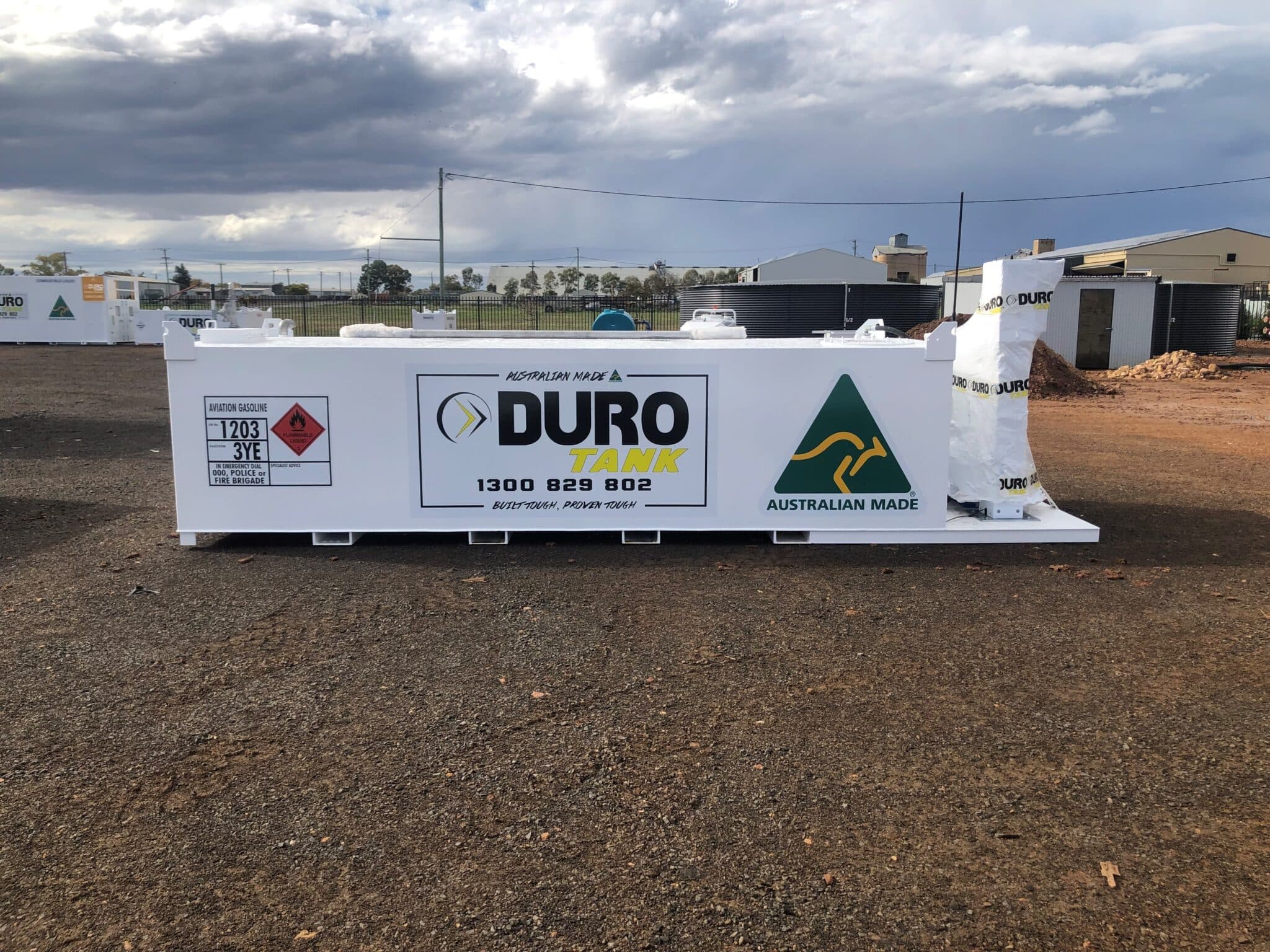
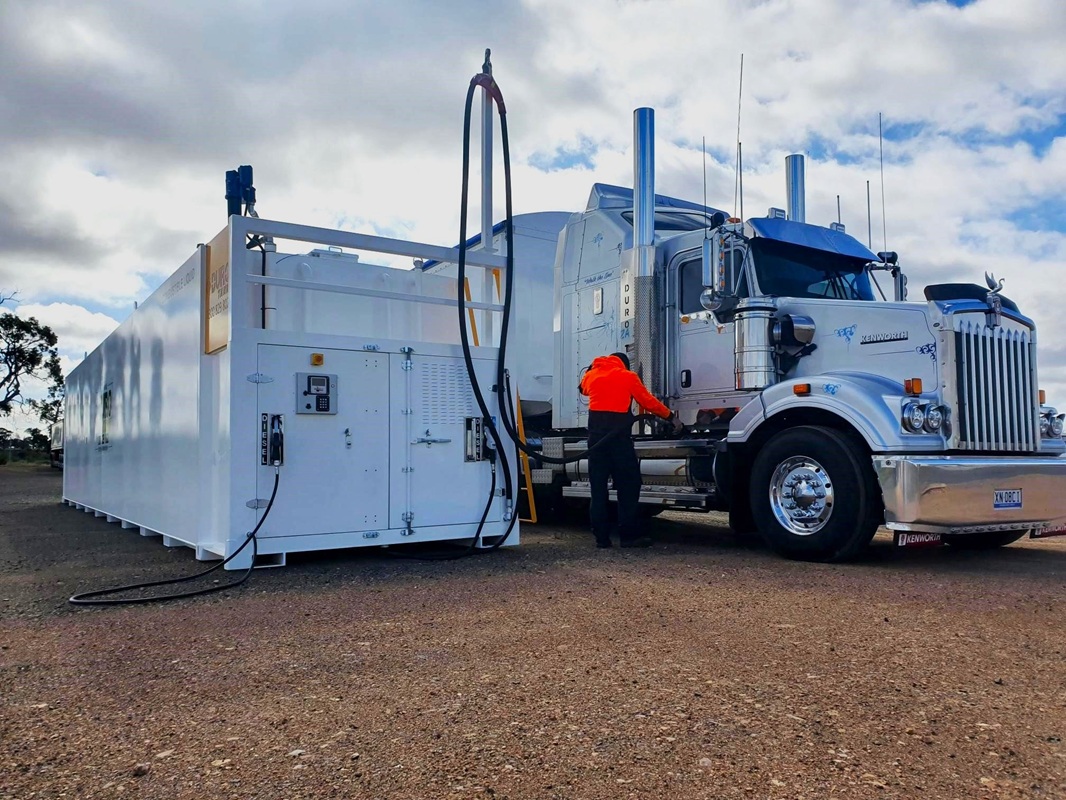
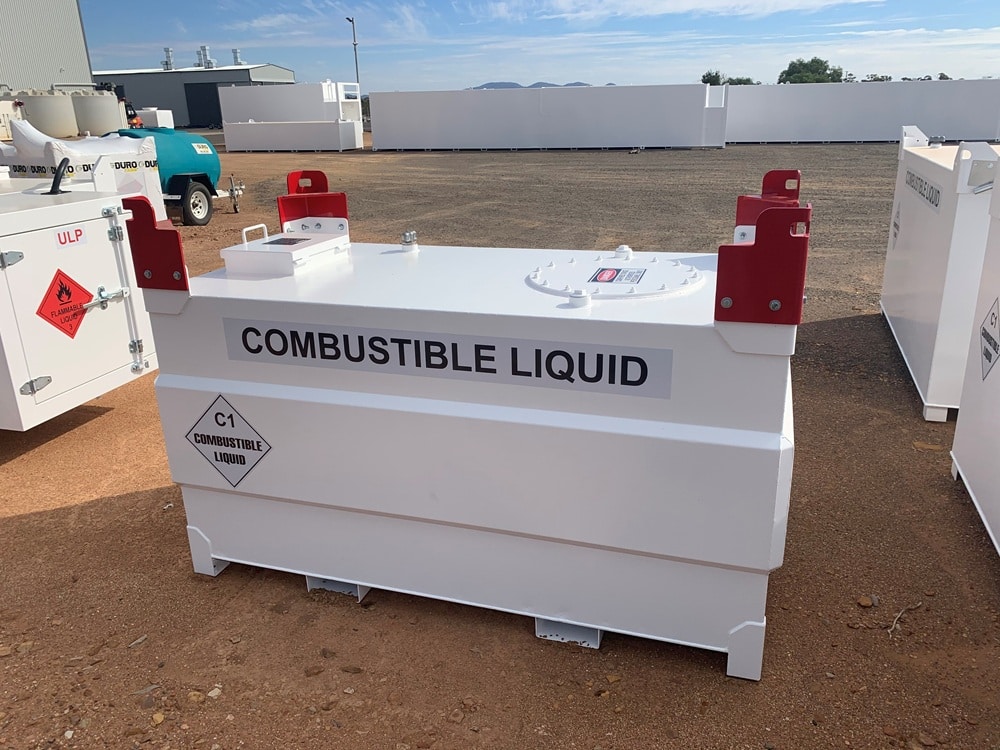
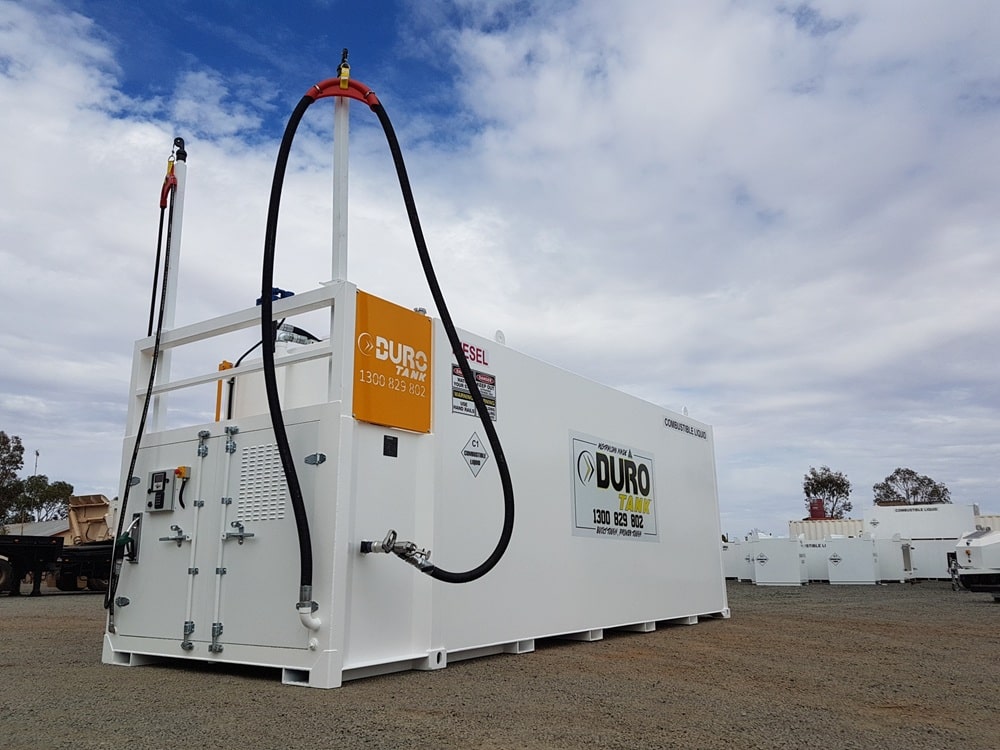
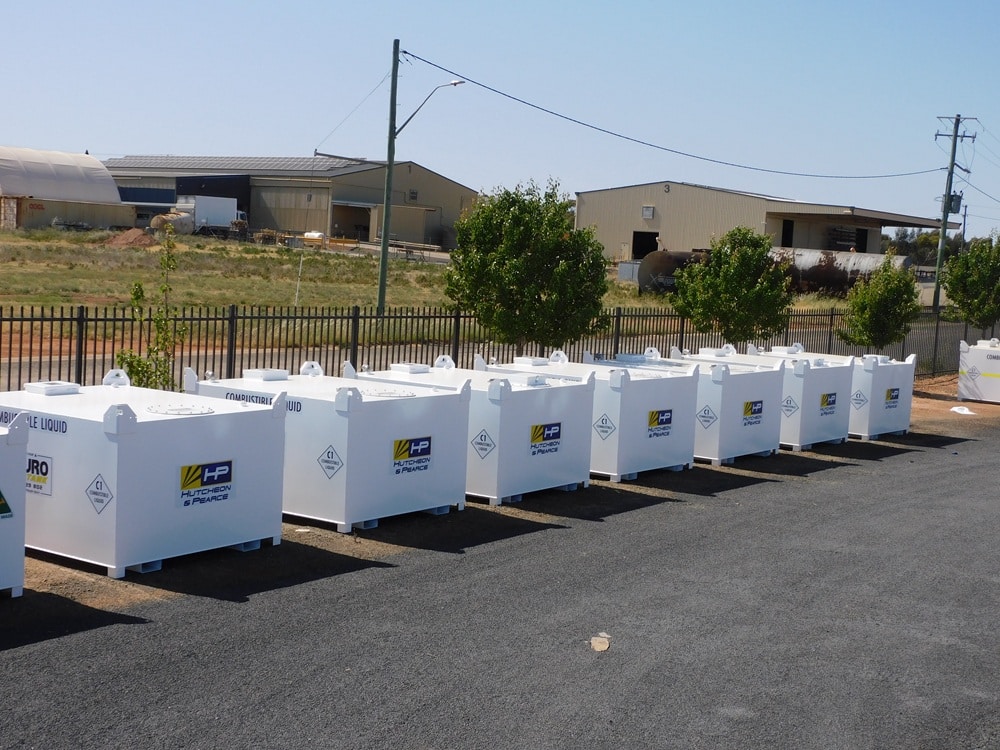
As an Australian made fuel tank manufacturer, Durotank offers a comprehensive range of tanks designed to accommodate various storage needs. If you’re looking for smaller fuel storage options, our Self Bunded Smart Cubes and transportable Self Bunded Duro Cubes are your optimal choice. These compact tanks are ideal for fuel dispensing, stacking and storing fuel. They are also secure and lockable, ensuring your fuel stays safe on site. Alternatively, for business’s needing larger or bulk fuel storage solutions, our Self Bunded Fuel Tanks, Self Bunded DAB Tanks, and Single Wall Tanks are popular choices due to their size and the long-term cost savings they deliver.
Choosing the right size involves balancing mobility with capacity, ensuring that the fuel tanks meet operational demands without compromising efficiency.
Choosing the right size
When selecting a fuel storage tank, several factors come into play beyond sheer volume. Considerations such as transportability, available space on-site, and specific operational requirements all influence which tank best suits your needs. Smaller tanks provide flexibility for remote sites or frequently changing locations, while larger tanks are suited for stationary setups requiring substantial fuel reserves. Discover our full range of tanks and trailers here.
Fuel compatibility
Another critical consideration is ensuring compatibility between the fuel tank and the type of fuel used. Different industries rely on different fuel types, such as diesel, ULP, oil, and specialised fuels like AdBlue. Durotank addresses these needs by providing tanks that are suitable with diesel, ULP, oil, AdBlue, Avgas/Jet A1, Waste Oil, and other popular fuels.
All Durotank tanks designed for diesel, ULP, and oil are made from mild steel, ensuring durability and reliability. In contrast, AdBlue tanks are made from stainless steel to maintain purity and prevent contamination, meeting stringent industry standards.
If you’re unsure which tank is most suitable for your businesses current fuel type, reach out to our helpful team on 1300 829 802 for instant answers.
Compliance and regulations
When it comes to the use of tanks in different industries or environments, local regulations often dictate tank size, placement, and safety measures to prevent environmental hazards and ensure operational integrity.
Durotank adheres strictly to these standards, providing products that comply with industry-specific regulations. Understanding these requirements is necessary for businesses to avoid fines and operational disruptions. You can learn more about the industry standards for storing flammable and combustible liquids here, and our commitments to adhering to regulations here.
Selecting the right tank is a decision that directly impacts your business’s efficiency and bottom line, saving you money in the long run. By assessing your specific fuel needs, considering available options, and ensuring compliance with regulations, you can optimise onsite fuel storage. Whether you operate in construction, agriculture, or another sector reliant on fuel, consulting with professionals and utilising tools like Durotank’s Fuel Savings Calculator can streamline the decision-making process.
How Durotank can help
Choosing Durotank means choosing reliability, durability, and compliance assurance in fuel tanks designed to meet diverse industry needs. Our bulk fuel storage solutions are built with durability in mind and are 100% Australian made. With a rich operational history and a highly regarded reputation in the construction and equipment hire industry, we are committed to delivering quality and convenient bulk fuel storage solutions for businesses Australia wide.
Contact us today on 1300 829 802 to find the perfect fuel storage solutions for your business.
Fuel storage is a critical component of operations across many industries in Australia. From farms and mines to construction sites…
AdBlue has quietly become essential kit for anyone running modern diesel equipment. It keeps engines compliant with emissions rules by…
A backup generator is only as reliable as the fuel sitting behind it. You can invest in the best standby…
Diesel does not last forever. Left sitting in a tank, the fuel you bought in good condition slowly changes, and…
If you store diesel on a farm, a mine site, a civil project or a transport depot, AS1940 is the…
When you are comparing steel fuel tanks, they can look remarkably similar on paper. They may have the same capacity,…
Search this question online and you will drown in British heating oil advice. OFTEC guidance, Environment Agency rules, Scottish EPA…
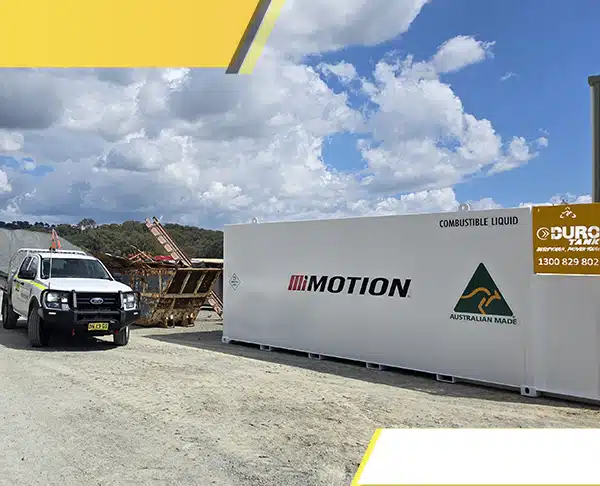

My experience with Durotank was exceptional from start to completion.
Emily was patient with us from the start - we took a while to make our decision, but she was always ready to help. She proactively addressed all enquiries and offered comprehensive support. No pressure, just good service.
Furthermore, Durotank was highly accommodating when we requested custom signage. It turned out great and looked fantastic.
I highly recommend Durotank to any organisation seeking a seamless, efficient, and thoroughly professional supplier for diesel tank requirements.


Joe Valesini - AUS Inds Customer Relationship Manager Motion
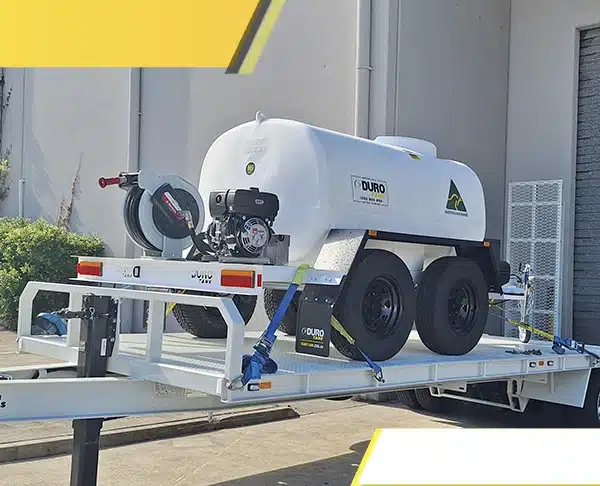
We had a great experience working with Durotank on our order for a 2,400L water cart trailer, set up for firefighting and tree watering. Their team was responsive throughout the process and delivered exactly what we needed on schedule, despite a very tight timeframe. The build quality is excellent - it’s clear a lot of care and expertise went into the manufacturing. We also value being able to support an Australian-made company and wouldn’t hesitate to recommend Durotank for both their product quality and service.
Joel Courtney – APMS Operations

We considered many other brands of diesel tank but quickly settled on Durotank - they ticked all the boxes. An Australian-made, self bunded quality tank with the ability to load and transport on-site whilst full is a winner.
The team communicated professionally with us regarding modifications and build timing. We will certainly use Durotank again and would confidently recommend them to others.
Andrew Reeves, Ethtec
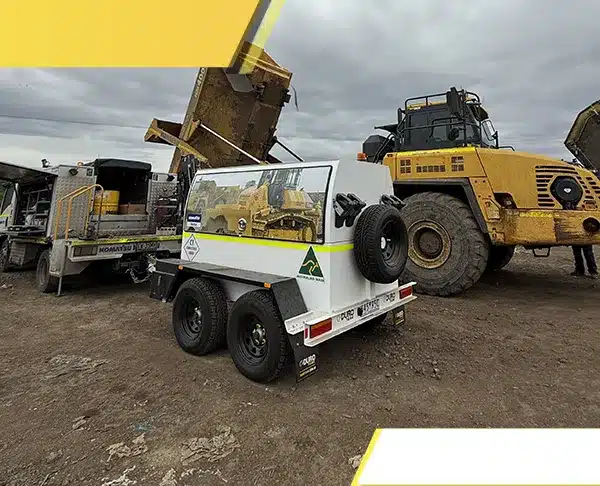
We had a great experience working with Durotank in purchasing our service trailer, from the enquiry stage to the delivery date the Durotank team were pleasant and very professional. Emily from the sales team answered any and all questions we had about specs and options, working with us to meet expectations and budget limitations. The production team kept us well informed of build schedule and approximate delivery dates. Overall we highly recommend the Durotank team if your looking for a service trailer, value for money is second to none and the quality is top notch.
Aaron Asquith - Leading Hand - Rental Komatsu Australia, Truganina Branch VIC
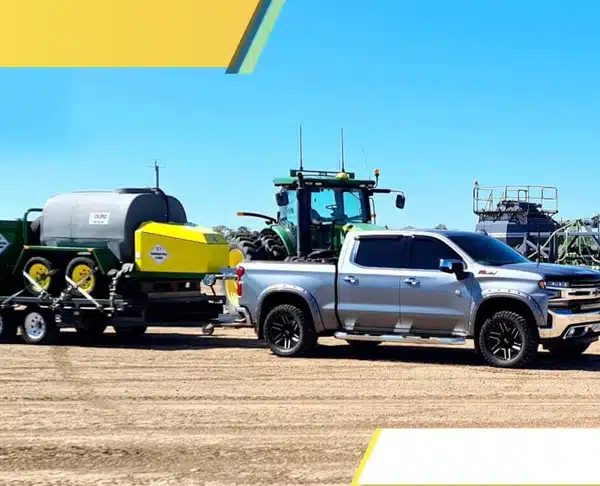
We purchased Durotank’s 2400 Litre poly water trailer with fire-fighter pump and hose reel, plus optional dribble bar and batter sprays attached.
Our property, Duxton Farm, borders the Kakadu National Park in the Northern Territory. Because of this, early season burning is extremely important to prevent uncontrollable bushfires later in the dry season. The trailer has been an invaluable asset to fire control – always full and ready to go when the call comes.
We’ve found it to be well balanced, empty or full, with the baffle ball system effectively controlling surge. We have had no issues with set-up, towing it with either a Landcruiser or Hilux.
Overall, we’re extremely happy with our purchase and the support from the Durotank team. We’ll be back.
Bruce Connolly, Northern Regional Manager, Duxton Farms

I purchased a Poly Tank Fuel Trailer from DUROTANK in April 2018. DUROTANK builds one of the best fuel trailers I have ever used. The build quality, engineering and attention to detail is unreal. The fuel trailer is rock solid, it tracks extremely well full of fuel at 100km/hr and its road worthy. All of the fittings are hoses are high quality hydraulic hose and crimped fittings so there are no leaks. The Durotank team is very easy to deal with and more than happy to help with any enquiries. The staff are friendly and it is a pleasure to do business with them. I’d buy another one in a heartbeat, that’s for sure
Ben Harris – AB Contract Farming
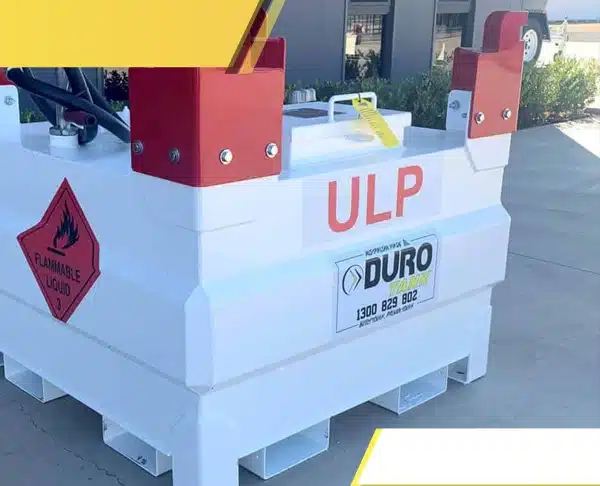
The Duro Cubes are going extremely well! My guys are very happy with them. Having them already saved us on oil transport on at least 2 occasions so far and has also allowed us to restructure our oil work days and use out of hours oil deliveries to make more efficient use of the time on site.
Field Supervisor, Electricity Distributor (AUSGRID)
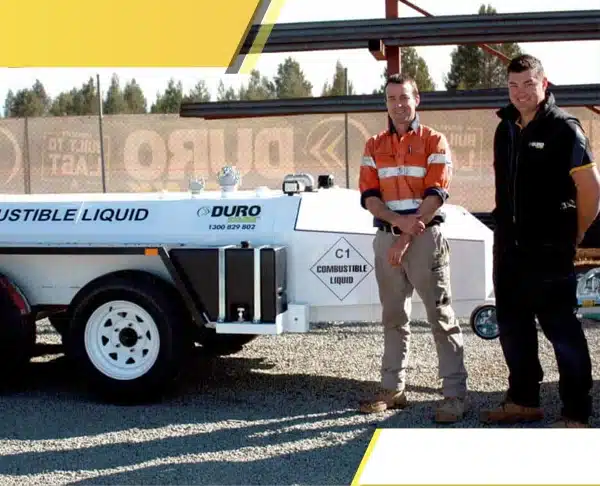
The fuel trailer I purchased from DUROTANK is well designed to withstand the harsh mining environment I work in, with no compromise to efficient and reliable fast fuel delivery
Brad Black – Hardrock Blasting Services
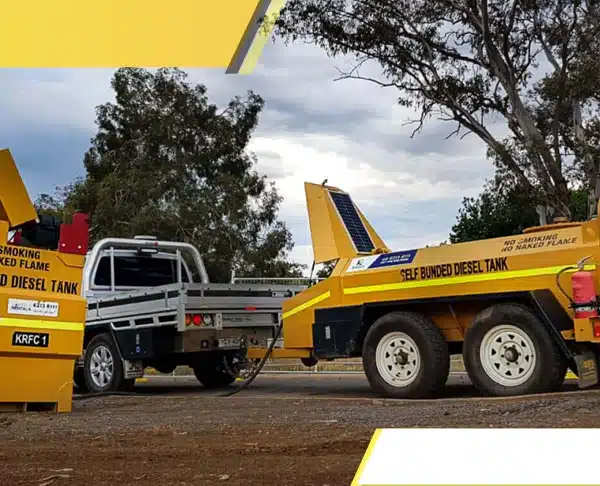
I would like to recommend Durotank to anyone that is considering their products. From first enquiry to after the product was delivered the customer experience was flawless.
Nick Dunlop – Kelton Rentals
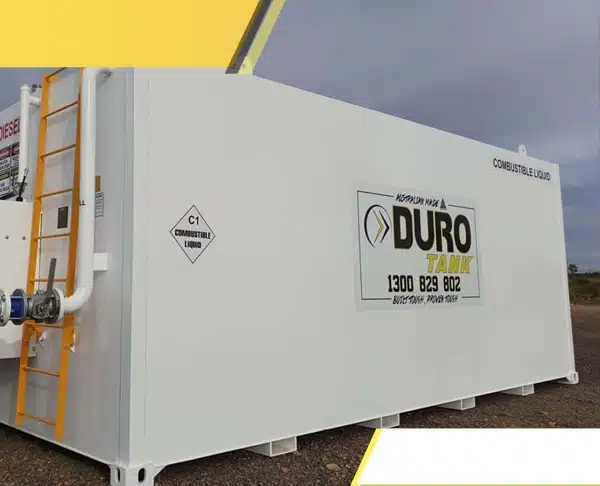
As a business owner I would highly recommend DUROTANK to any person who is serious about saving money, purchasing and storing their own fuel in bulk, particularly in today’s challenging economic times. DUROTANK supplied us an excellent quality Australian made fuel tank built to the specs that suited out business. Our staff love how easy it is to use and how much time it saves refuelling each week. We purchased the Smartfill System with it and its definitely a worthwhile investment both for use and fuel management. The aftersales service from DUROTANK has been outstanding.
Tony Grace – Lachlan Valley
The supply process from quotation to order placement, being kept informed of manufacturing process and delivery date and final delivery was seamless. I really appreciated the proactive approach to driving a positive Customer Experience. I couldn’t fault the product or service at all.
Peter – Meadows Family Restaurants
All our fuel trailers and on site tanks are supplied by Durotank which are built with strength and quality and always delivered on time, helpful and friendly staff, won’t get better.
